Serralunga
With its passion for innovation, Serralunga is renowned for pushing the boundaries of materials, technologies and aesthetics in order to create groundbreaking products that both inspire and delight.
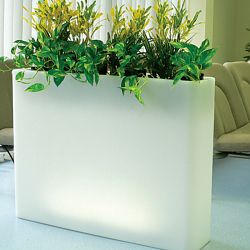
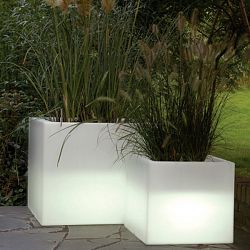
The company's eye-catching furnishings whether a sculptural planter, geometric table or minimal sun-bed are conceived to be highly functional as well as beautiful, and attest to the firms supreme mastery of new synthetic polymers and cutting-edge moulding processes.
Serralunga is the name of the family that has been the creative and entrepreneurial heart of the company for five generations. It was founded in Biella, Italy in 1825.
Exuding an understated luxury, Serralungas products are marked by a rare sense of harmony that enables them to be grouped together into intriguing and often quite dramatic arrangements. Their strong sculptural presence also helps provide a characterful identity to the environments in which they are placed, whilst ensuring the designs look as good indoors as they do outdoors.
The company began working with international designers in order to produce a collection with spectacular new shapes and uses, which became a reference point and a trend setter in the field.
The collections produced were a combination of unique forms and interpretations, capable to transform a purely functional object like a pot into an extraordinarily decorative furnishing item. It was only a short step from pots to other outdoor furniture items like chairs, tables and lamps, reinvented to give outdoor spaces like gardens, terraces and swimming pools, but also parks and squares, the same importance as the indoor has.
This was the path that led Serralunga in 2010 to embrace its Living Different philosophy: breaking from routine, revolutionizing traditional environments, embellishing every interior design space with its forms and, at the same time, enjoying all the pleasure of outside spaces by creating a new vision of the Urban Outdoors: an outside environment that stands out for its unique style, which makes it comfortable, warm and aesthetically valuable, whereas in the past only indoor spaces were this way.
For seating and eating browse our selection of Teak Patio Furniture, Dining Chairs, Illuminated Outdoor Furniture and Outdoor Wicker Furniture . Our selection of Sofas and Loveseats will provide you an elegant place to sit and enjoy your garden. Add the latest modern outdoor furniture Modern Outdoor Furniture and Outdoor Daybed to finish off your outdoor living space.